But our starting point is that there is no shortage of jobs. There is a shortage of people to fill them.
Kjell G. Salvanes

Europe is facing labour shortages, and many companies are struggling to find people with the right skills. NHH Professor Kjell G. Salvanes and three fellow European researchers will now investigate why.
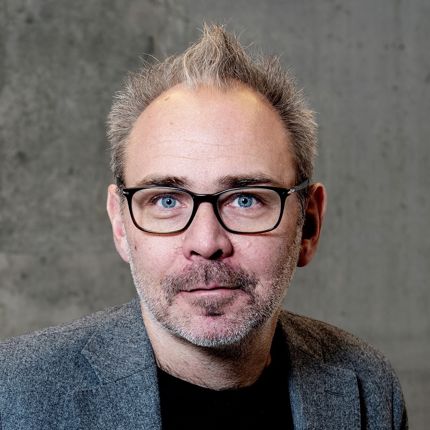
Professor Kjell G. Salvanes and his international research team have been awarded a €12.5 million Synergy Grant from the European Research Council (ERC) over six years.
Competition for ERC funding is extremely fierce. Only around five per cent of applications were successful in this year's funding round.
‘This is fantastic recognition of Kjell and labour market research at NHH. When only five per cent of applications are successful, it says a great deal about the quality of the project and just how important and ambitious this research is,’ says NHH Rector Helge Thorbjørnsen.
LabShort takes as its starting point the growing shortage of labour across much of Europe, alongside structural imbalances, or ‘mismatches’, with unemployment in some areas and labour shortages in others. These imbalances have major consequences for productivity, wages, income distribution and the provision of public services. They are also expected to be exacerbated by the rapid technological changes we are currently experiencing. According to the project description, an ageing population, low birth rates and tighter immigration policies could make the problem even more severe in the years ahead.
But our starting point is that there is no shortage of jobs. There is a shortage of people to fill them.
Kjell G. Salvanes
When jobs disappear, political debate often focuses on how governments can help create new ones. Salvanes sees a paradox in this:

The €12.5 million grant from the European Research Council (ERC) will be shared between four host institutions.
The scheme enables small groups of outstanding researchers to work together on ambitious scientific challenges that cannot be addressed by an individual researcher or research group alone.
‘We tend to think of jobs as something we need to support and create more of. But our starting point is that there is no shortage of jobs. There is a shortage of people to fill them,’ he says.
Salvanes is Professor at the Department of Economics and Research Director for Labour Economics at FAIR, a Centre of Excellence at NHH.
According to Salvanes, two factors in particular contribute to labour shortages.
‘One is the skills gap. The other is geography.’
Problems arise when workers do not necessarily have the skills that employers are looking for.
The researchers will investigate why companies struggle to recruit employees with the right skills, and the role played by education, recruitment and expectations.
Rapid technological developments make these questions even more relevant, Salvanes believes.
‘What should young people study? Neither we nor employers know for certain. Technological developments make it difficult to predict which skills will be in demand.’

He points out that rapid technological changes, particularly those involving artificial intelligence, could widen the gap between the skills employers need and those workers actually possess.
The second major challenge is geographical mobility. Even when there is a shortage of workers in one region, people do not necessarily move there from areas with fewer job opportunities.
Salvanes points to Northern Norway as an example. New jobs are being created there, but that does not necessarily mean workers from other parts of the country will apply for them.
‘Why don't people move to take these jobs? Is it the pay, the working environment or family circumstances that hold them back? We already know some of the answers, but there is still a great deal we don't understand.’
He also points to England, where wages and labour markets differ considerably between the north and south.
‘People do move, but not necessarily enough to bring workers to where they are needed. At the same time, we don't want everyone living in one city. That would also be extremely costly. We need to understand these mechanisms better.’
We need to understand these mechanisms better.
Kjell G. Salvanes
The researchers will examine mobility both between regions and across national borders. Among other things, they will combine administrative register data from several countries with new surveys and develop more precise measures of labour and skills shortages.
The aim is to gain a better understanding of why employers and workers do not always find each other, and how employment can be increased in areas where there is untapped labour potential.
Richard Blundell (coordinator), Professor at the Institute for Fiscal Studies (IFS), London.
Fabien Postel-Vinay, Professor at University College London.
Kjell G. Salvanes, Professor at NHH’s Department of Economics and FAIR.
Andrea Weber, Professor at Central European University, Vienna.
The NHH research team: Salvanes is joined by NHH professors Katrine V. Løken and Alexander Willén, along with other members of the research group.
Salvanes is one of four Principal Investigators (PIs) in the six-year project. Blundell is the project coordinator, and the initiative originated with the research community in London.
For Salvanes, the collaboration is the result of academic relationships stretching back several decades. As early as 2003, he spent a year as a visiting researcher at University College London, and he has since worked closely with Blundell and the researchers around him.
‘These collaborations develop over a long period of time. I've known Richard for many years, and we've worked together on these kinds of questions before.’
At NHH, Salvanes will be working particularly closely with professors Katrine V. Løken and Alexander Willén, as well as the rest of the research team.
He is very pleased with the team and highlights, among other things, Løken and Willén's previous research on labour mobility between Norway and Sweden, an important topic in the new project.
‘How does it feel to receive one of Europe’s most prestigious research grants?’
‘I do like a bit of praise, just like everyone else,’ he jokes.
But Salvanes is quick to highlight the research environment he is part of at FAIR. The grant is about far more than personal prestige, he emphasises.
‘We've built a research environment that is getting noticed. We have an international profile, and when researchers are looking for partners for projects like this, they think of us.’
One ERC grant is impressive. Two is fantastic. But three in one year, for a research centre of this size?
Helge Thorbjørnsen
With this latest award, researchers at FAIR have secured three ERC grants in 2026 alone. The other two were awarded to professors Bertil Tungodden, Director of FAIR, and Alexander Willén.
‘One ERC grant is impressive. Two is fantastic. But three in one year, for a research environment of this size? That's quite extraordinary! FAIR really shows that you don't have to be a large institution to compete at the very highest level of international research,’ says the NHH Rector.
Salvanes believes the latest grant is recognition of the expertise the NHH research community has developed, particularly through combining administrative register data, surveys and experiments.
‘We're a relatively small research community at a small university by international standards, so this isn't something that happens every day. And when researchers talk about the leading labour economics research environments in Europe, we're among them.’