Norway’s path to social mobility
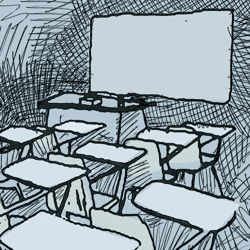
New research from NHH shows that, from the 1930s to the 1950s, Norway went from having low social mobility to becoming a world leader. Education really took off during the same period.
All research news from the Department of Economics
New research from NHH shows that, from the 1930s to the 1950s, Norway went from having low social mobility to becoming a world leader. Education really took off during the same period.
Income inequality can result in less willingness to contribute to a common good that benefits all, a new NHH study shows.
New European research in behavioral economics. Four highly interesting keynote speakers: The three-day ESA conference at NHH is underway.
On Friday 9 September 2016 Sebastian Fest will hold a trial lecture on a prescribed topic and defend his thesis for the PhD degree at NHH.
On Thursday 1 September 2016 Simen Aardal Ulsaker will hold a trial lecture on a prescribed topic and defend his thesis for the PhD degree at NHH.
There are major financial benefits to living together with a partner, however these benefits are not equally distributed. Men derive the greatest benefit. Women consume much less.
This spring more than 57 000 new graduates will make their way from higher education to a labour market with the highest unemployment figures for a decade. This cohort's opportunities to join the correct career path are worse than previous ones.
Inequality in childhood manifests itself strongly in adulthood. Why is this the case, and is this fine with us? This is some of what a group of NHH researchers intend to study. They are now in the final round of the Centre of Excellence process
Linda Nøstbakken is NHH’s new Professor. She has just been promoted to full Professor in resource economics.
Last year, Facebook's "Like" button was pressed some six billion times a day, and we follow the herd when it comes to liking, according to a new NHH study. It is very conformist, and we tend to like what others have liked.
On Thursday 9 June 2016 Jan Erik Meidell will hold a trial lecture on a prescribed topic and defend his thesis for the PhD degree at NHH.
The paper «What Explains the Gender Gap in College Track Dropout? Experimental and Administrative Evidence» has been published in American Economic Review.
Willpower is a finite resource, or so many people believe, that can run out under pressure.
On Thursday 2 June 2016 Julia Tropina Bakke will hold a trial lecture on a prescribed topic and defend her thesis for the PhD degree at NHH.
On Monday 25 April 2016, Helge Sandvig Thorsen will hold a trial lecture on a prescribed topic and defend his thesis for the PhD degree at NHH.
"The institutions we have built up in Norway since the 1980s are preventing a new crisis," says Øystein Thøgersen
A number of laboratory experiments have analysed the willingness of people to compete. However, to what extent is competitive behaviour in the lab linked to choices and results in real life?
The Journal of Economic Behavior & Organization (JEBO) has published a special issue which aims to show how lab experimental methods can be applied in developing countries.
On Monday 28 September 2015 Darina Steskal will hold a trial lecture on a prescribed topic and defend her thesis "Essays on Urban Wage Premium, Returns to Internal Migration and Migrants' Selection in Norway" for the PhD degree at NHH.
On Friday 25 September 2015 Agnes Kovacs will hold a trial lecture on a prescribed topic and defend her thesis "Essays on Households' Intertemporal Resource Allocation" for the PhD degree at NHH.
On Tuesday 16 June 2015 Elias Braunfels will hold a trial lecture on a prescribed topic and defend his thesis "Political Institutions, Economic Institutions, and Economic Growth" for the PhD degree at NHH.
Deforestation in tropical areas accounts for up to 12 per cent of human CO2 emissions. Researchers at NHH are trying to understand the correlations between economic development and deforestation.
Warmer climate creates trouble for power plants. When the temperature rises, plants are forced to reduce production or shut down.
On Monday 4 May 2015 Magne Krogstad Asphjell will hold a trial lecture on a prescribed topic and defend his thesis for the PhD degree at NHH.
We want to believe that common sense steers our choices. The problem is that we are a little lax, even when it comes to important climate issues.
On Friday 16 January 2015 Morten Sæthre will hold a trial lecture on a prescribed topic and defend his thesis for the PhD degree at Norwegian School of Economics.
There may be major unintended consequences when society restricts benefits. This is felt by the children of young single mothers. The effects of little money at home and less time to focus on children are pronounced in lower secondary school, where their marks are clearly lower.
On Wednesday 17 December 2014 Lars Christian Bruno will hold a trial lecture on a prescribed topic and defend his thesis for the PhD degree at NHH.
Europe's economic growth is driven by poorer countries and regions that are catching up to the wealthier areas.
Norway has experienced robust growth, low unemployment and stable inflation. NHH Professor Øystein Thøgersen argues that the current situation is mostly down to luck.
Ever wondered how people figure out what is fair? Look to the brain for the answer. According to a new Norwegian brain study, people appreciate fairness in much the same way as they appreciate money for themselves, and also that fairness is not necessarily that everybody gets the same income.
On Friday 10 October 2014 Eirin Mølland will hold a trial lecture on a prescribed topic and defend her thesis for the PhD degree at NHH.
On Friday 27 June 2014 Alief Aulia Rezza will hold a trial lecture on a prescribed topic and defend his thesis for the PhD degree at NHH.
International mergers reduce the influence of trade unions and lead to lower pay for crew, according to new research. Norwegian flight crews are facing tougher times, according to Professor Lars Sørgard.
On Monday 24 March 2014 Lukáš Lafférs will hold a trial lecture on a prescribed topic and defend his thesis for the PhD degree at NHH.
Resource-intensive mergers in the hospital sector are based on a desire for better and cheaper hospitals, but when the positive effects cannot be documented, it is about time we showed less enthusiasm for such mergers, according to NHH professor Kurt R Brekke.
Political leaders in the EU countries draw sharp criticism from Professor Gernot P. Doppelhofer. He believes weak decision-makers and poor communication are fuelling the crisis in Southern Europe.
New research by economist Astrid Kunze shows that taking a few years off work results in bigger losses for highly educated women than for women with less education. She is critical of the cash benefit system.
On Thursday 6 June 2013 Bjørn-Atle Reme will hold a trial lecture on a prescribed topic, and defend his thesis for the PhD degree at NHH.
On Tuesday 4 June Kartika Sari Juniwaty will hold a trial lecture on a prescribed topic, and defend her thesis for the PhD degree at NHH.
On Friday 31 May 2013 Trond Halvorsen will hold a trial lecture on a prescribed topic, and defend his thesis for the PhD degree at NHH.
On Friday 3 May 2013 Harald Nygård Bergh will hold a trial lecture on a prescribed topic, and defend his thesis for the PhD degree at NHH.
'Every time there's a crisis, everyone knows that the economists will take a hiding,' says NHH professor Erik Ø. Sørensen.
Bertil Tungodden was recently appointed associate editor of the reputed journal Management Science.
Ingvild Almås of the Norwegian School of Economics (NHH) believes that incomes in poor countries are systematically overestimated in traditional economics research. She launches a new method for measuring income in the April edition of American Economic Review.
The Bergen Centre for Competition Law and Economics opened in 2011. Legal scholars and economists from the University of Bergen (UiB) and the Norwegian School of Economics (NHH) have worked together in a unique research collaboration on competition policy.
'When a company is in the danger zone and there is a risk that the authorities will expose cartel activities, the lawyers turn up with an application form for leniency. There are lawyers who fly all over the world to save companies from huge fines and directors from prison sentences. As soon as they smell trouble for a company, they get in touch with the competition authorities so that they can apply for amnesty from prosecution.'
Should we let children stay children for as long as possible, or is an early school start important to prepare children for life in a knowledge-based society?
A neuroeconomic study is being conducted at Haukeland University Hospital, the first of its kind in Norway. Economists and neuroscientists have joined forces to study how the brain works when you make economic decisions. The goal is to show that we do not dislike inequality, but injustice.
A lot has gone wrong in the Greek economy in the last year - including in the air. Earlier this year, the EU Commission blocked the proposed merger between Olympic Air and Aegean Airlines. The reason given was that the merger might lead to the creation of a 'quasi-monopoly'. This will be one of the topics for discussion at the Annual Conference of the Association of Competition Economics (ACE) on 17 and 18 November.
Professors Kjell Gunnar Salvanes and Jarle Møen and research fellow Helge Thorsen have published the results of a research project on the selection and allocation of labour to the teaching profession. The main findings are surprising and some people may also find them controversial.
"Economics Evolving, A History of Economic Thought" is the title of Professor Emeritus Agnar Sandmo's recently published history of economic thought.
A microfinance research project led by NHH professors Bertil Tungodden and Kjetil Bjorvatn has received a grant of 9.7 million NOK from the Norwegian research Council. The funds will be used for several purposes, including continued research on the effect of basic business education for microfinance clients in Tanzania.
What happens when one of the USA's largest investment banks goes bankrupt?
NHH researchers Øystein Foros (t.h) and Frode Steen believe that petrol stations in Norway are coordinating petrol prices, something that costs customers money. By publishing recommended retail prices on their web pages the players in the market can adjust their prices to one another. Today the market follows a cycle with the highest price occurring on Monday and the cheapest petrol on Sunday. Now, Foros and Steen stress that the companies must be forbidden from publishing recommended retail prices on the internet.
In the future of Norwegian agriculture the role of the farmer could be more of "park curator" rather than producer of raw goods, believes NHH-professor and agricultural economist, Rolf Jens Brunstad.