
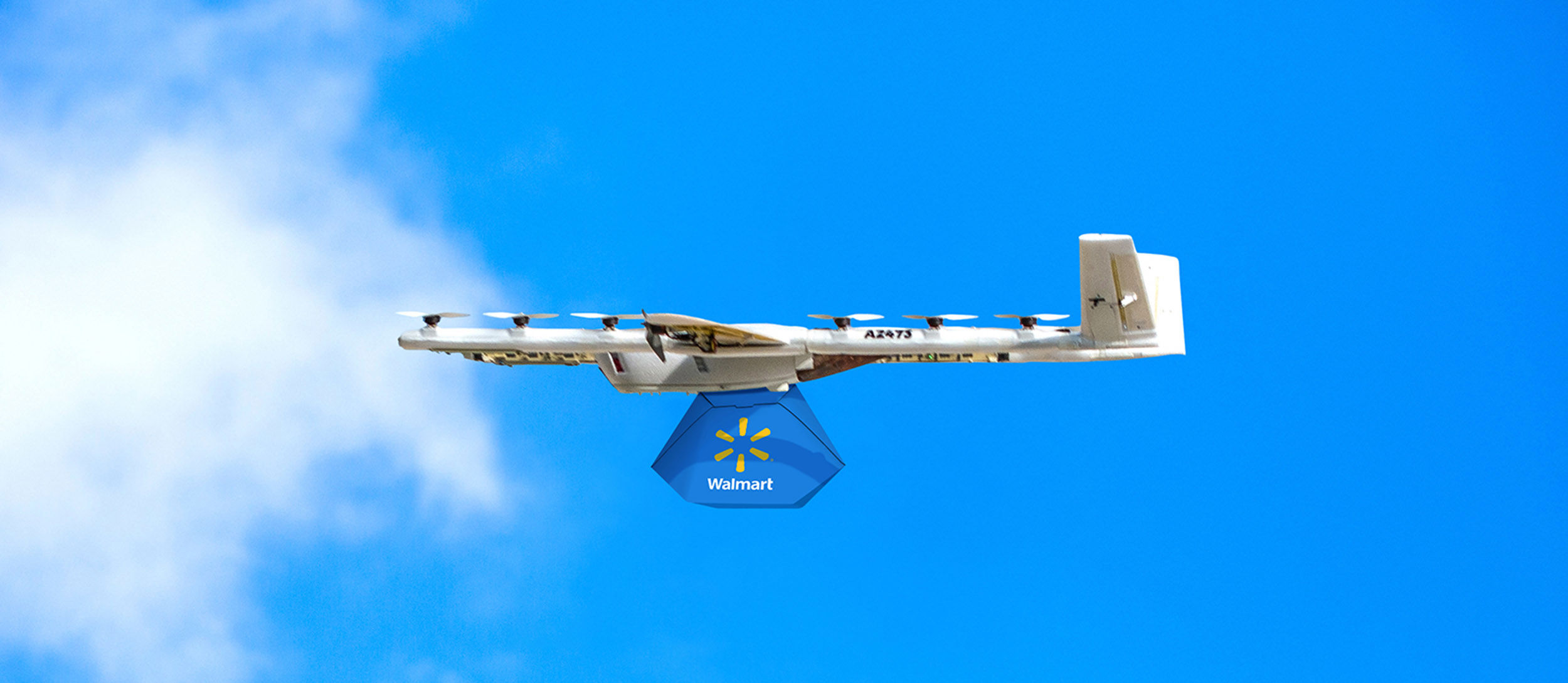
Flying Shopping Bags
Few technologies illustrate the future of retail better than drone delivery of groceries. While many still view drones as a futuristic curiosity, the technology is already in use in several countries.
Nevertheless, Professor Odd Gisholt, one of Norway’s most respected experts on retail and grocery trade, remains somewhat unconvinced by the technology’s potential.
He has voiced this opinion both in writing and through public commentary. While Norway has not yet evaluated the technology, it has already become part of everyday life in several areas of the United States.
US in the lead
The United States has taken the lead in large-scale commercial drone deliveries.
The United Kingdom is following suit with cautious trials and limited rollouts; and France is primarily focused on establishing the regulatory framework that will eventually make drone delivery a standard part of everyday life.
Below, we examine the distinct paths taken by these three nations.
No longer merely an experiment
Development has, not surprisingly, progressed most rapidly in the United States. Retail giant Walmart has partnered with drone companies such as Zipline and Wing to deliver everything from milk and coffee to medicine and household goods.
The service is no longer merely an experiment for tech enthusiasts; it has become a commercial solution utilized by customers on a large scale. According to Walmart, their drone program has completed millions of deliveries, with the goal of getting groceries to customers within 10 to 30 minutes.
The advantage is clear: a drone flies in a straight line, bypasses traffic congestion, and consumes little energy.
For the customer, this means that a missing dinner ingredient, cough medicine, or a fresh bag of coffee can arrive just minutes after being ordered.
For retailers, this technology represents an opportunity to reduce costs associated with the final – and most expensive leg of distribution, transport from the store to the customer.
Lightweight items
In the UK, development has been more cautious, yet still noteworthy. The grocery chain Tesco has partnered with the Irish company Manna to evaluate drone deliveries for smaller shopping baskets.
The ambition is to offer customers delivery within minutes from local stores. This suggests that many urgent purchases consist of just a few lightweight items – precisely the type of delivery for which drones are well-suited.
Amazon is also making a push in the UK. In Darlington, County Durham, the company has expanded its Prime Air service from approximately 600 to around 8,000 households, following safety approval from the UK Civil Aviation Authority (CAA) that allows drones to fly over more densely populated areas.
Small packages weighing less than 2.2 kg are delivered in under two hours; however, Darlington remains Amazon’s only operational site in the country.
A different strategy
France has adopted a different strategy than the US and the UK: here, the focus is first on regulation, safety, and the integration of drones into existing airspace.
French authorities view drone delivery as part of a broader initiative for "smart mobility," aiming not only for faster deliveries but also for reduced traffic congestion and lower greenhouse gas emissions in urban areas.
The contrast is clear: the US has prioritized volume and commercial operations; the UK has proceeded through limited trials and specific locations like Darlington, while France has prioritized regulation and safety from the outset.
What all three have in common is that the technology is ready long before the regulatory framework surrounding it.
Airspace management is critical
Nevertheless, there are challenges. Noise, privacy, security, and airspace management are issues that must be resolved before the skies are filled with flying shopping bags.
Many residents do not want a constant buzzing of drones over their neighbourhoods. At the same time, the technology requires advanced systems to avoid collisions and ensure safe operation under all weather conditions.
Despite these challenges, this development seems unstoppable. As e-commerce, artificial intelligence, and automation converge, drone deliveries emerge as a natural progression of the current logistics revolution. What seemed like science fiction just a few years ago is now becoming a part of everyday life.
The question, therefore, is not whether drone deliveries will arrive, but how quickly they will become as much a standard feature of retail as self-checkout counters, unmanned and online stores are today.
Sources: Walmart/Zipline, Wing, Tesco/Manna, Amazon, Retail Gazette.