Won NOK 50,000 for an AI Solution to Combat Loneliness
While older people sit alone, volunteers who want to help remain stuck on waiting lists for months. In just three days, NHH students developed an AI solution to connect them.
Imagine Arne, a retired widower. He would love someone to share a cup of coffee with. Hanna, a volunteer, would love to visit someone. They live only four kilometres apart. The need is there, and so is the willingness to help. The problem? Arne and Hanna are on different waiting lists.
The solution? Ask NHH students Markus, Inez, Chin-Yun and Edgars.
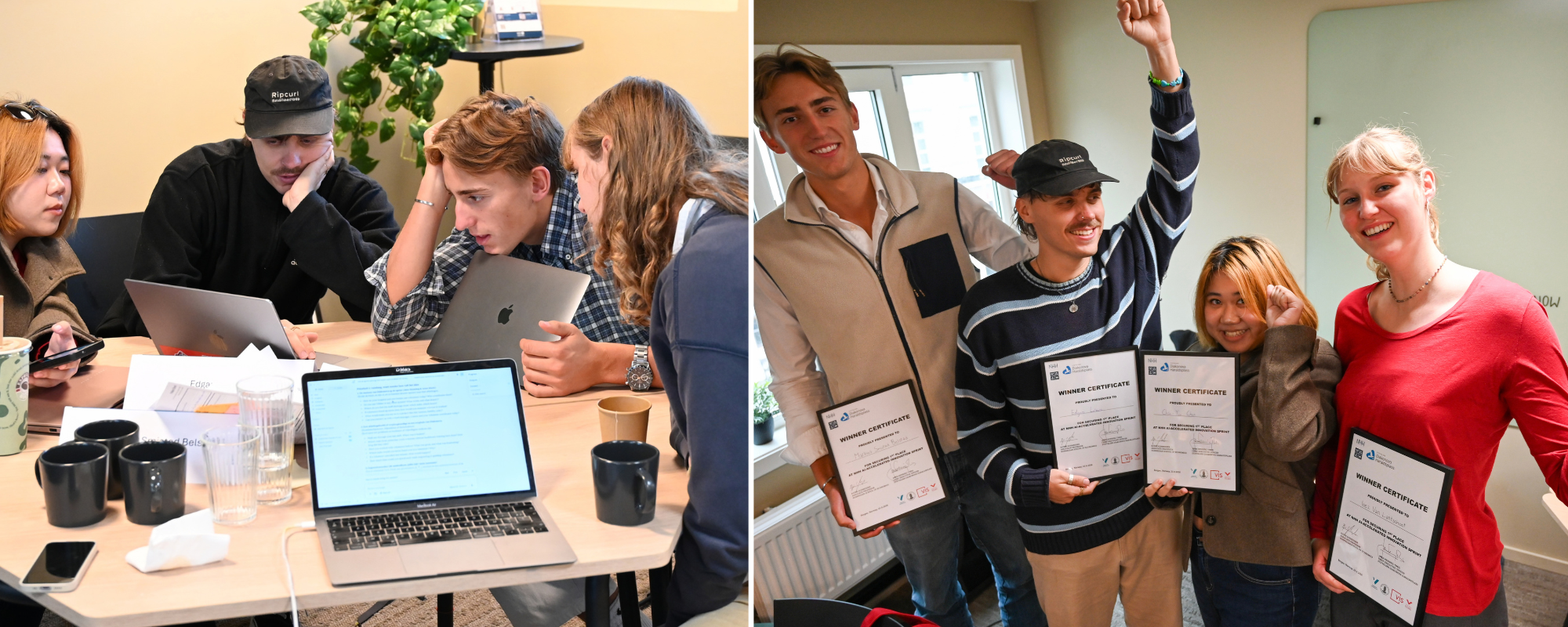
They are now holding framed diplomas in their hands, proof that they have won NOK 50,000 for creating a digital platform that connects volunteers with lonely older people.
'A bit shocking,' says Edgar Laizans.
Working at breakneck speed, the four students developed the AI solution Ready Hands and claimed victory in this autumn's AI-Accelerated Innovation Lab at NHH. The prize money will be used to further develop the idea. Perhaps it could eventually become a start-up that helps improve elderly care.
'Yes, that is definitely something we need to start talking about now,' says teammate Markus Smistad Belstad.
Volunteers to Ease Care Burden
The innovation lab is part of Tilt Student, a collaboration between NHH, Western Norway University of Applied Sciences (HVL), the University of Bergen (UiB), and VIS (Vestland's innovation company). The sprint was first organised last year.
The challenge, or paradox, presented to the 30 students this year was:
How can we create more care with fewer hands without losing the human element in elderly care?
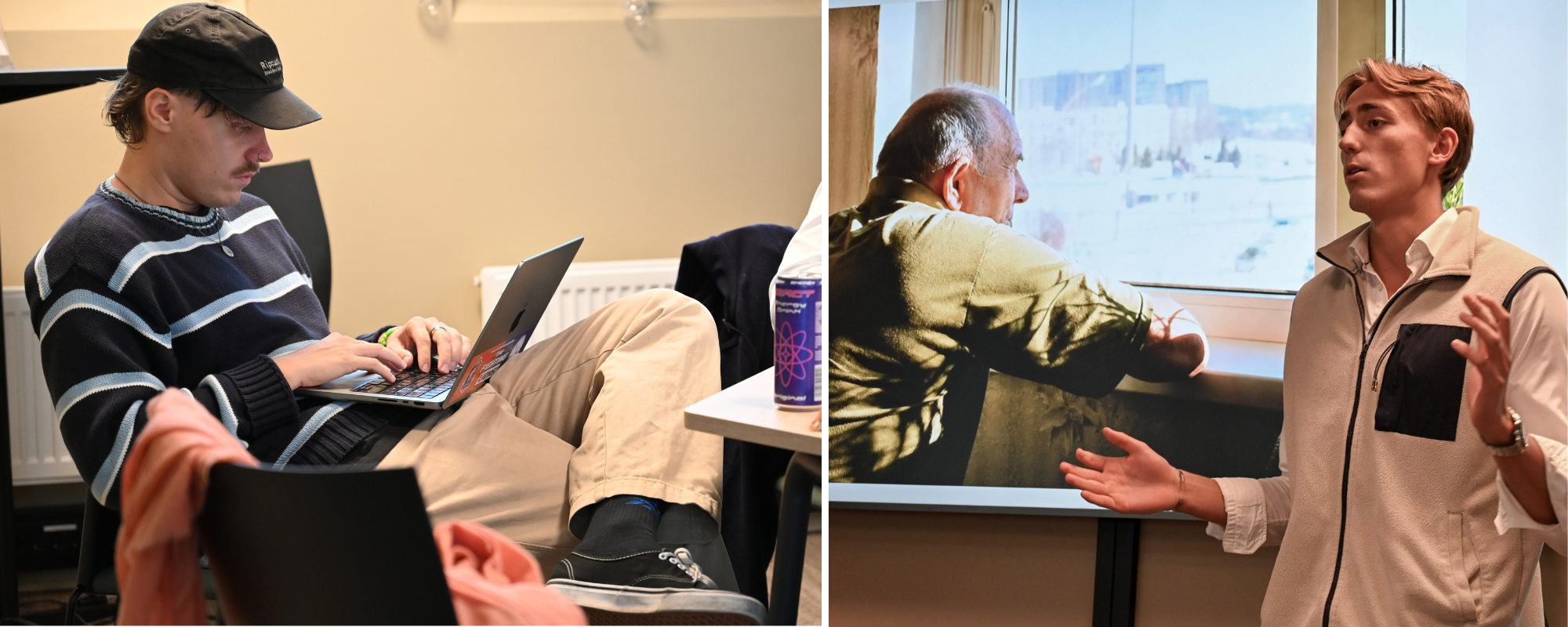
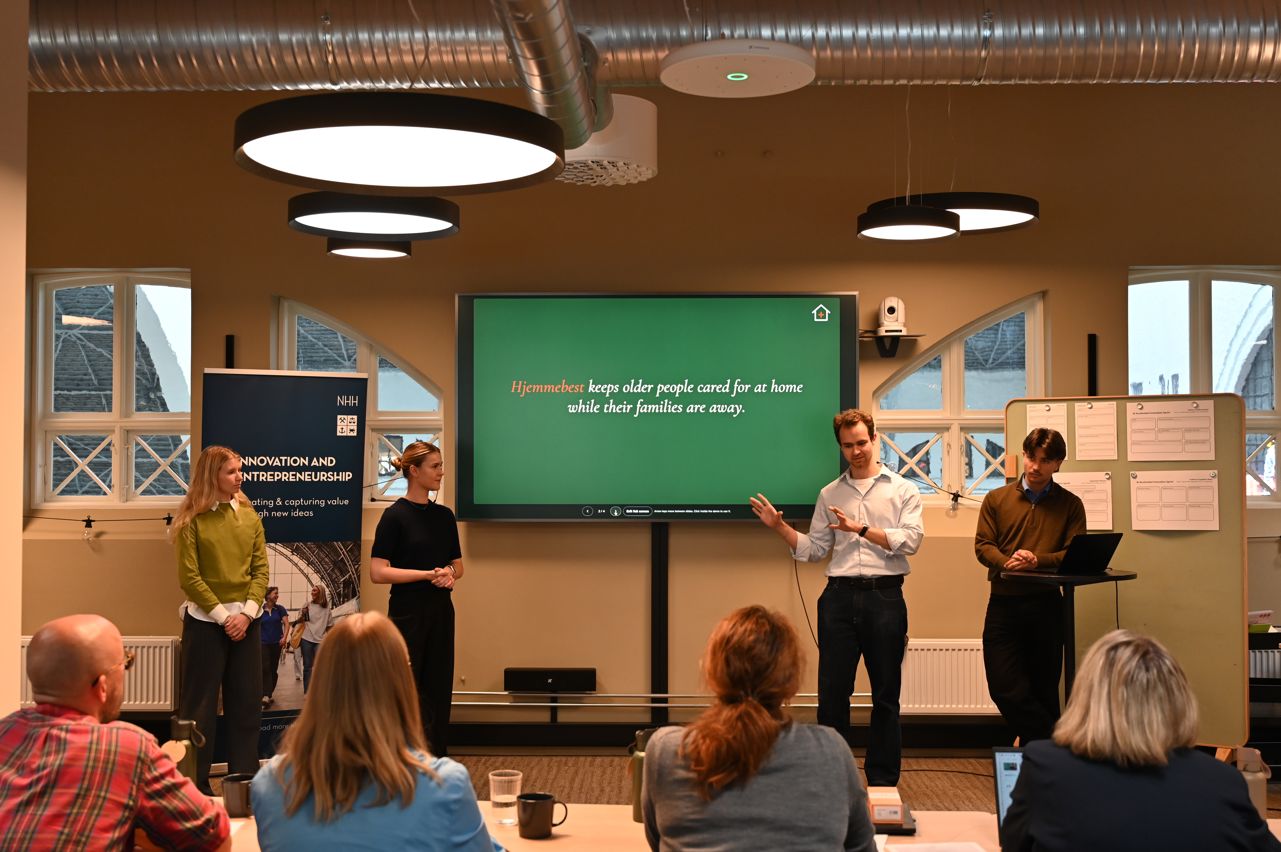
The students then had three days to develop a solution and present a prototype to the jury.
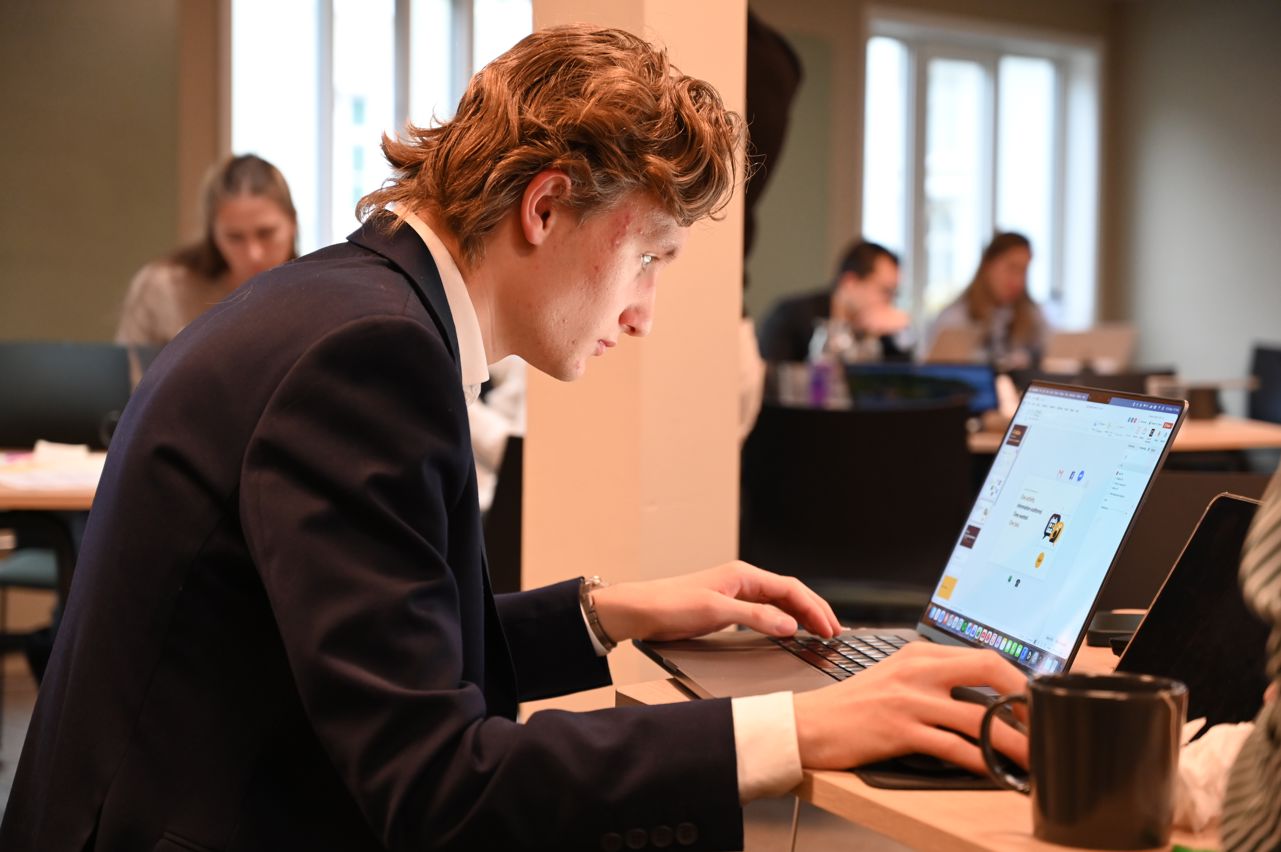
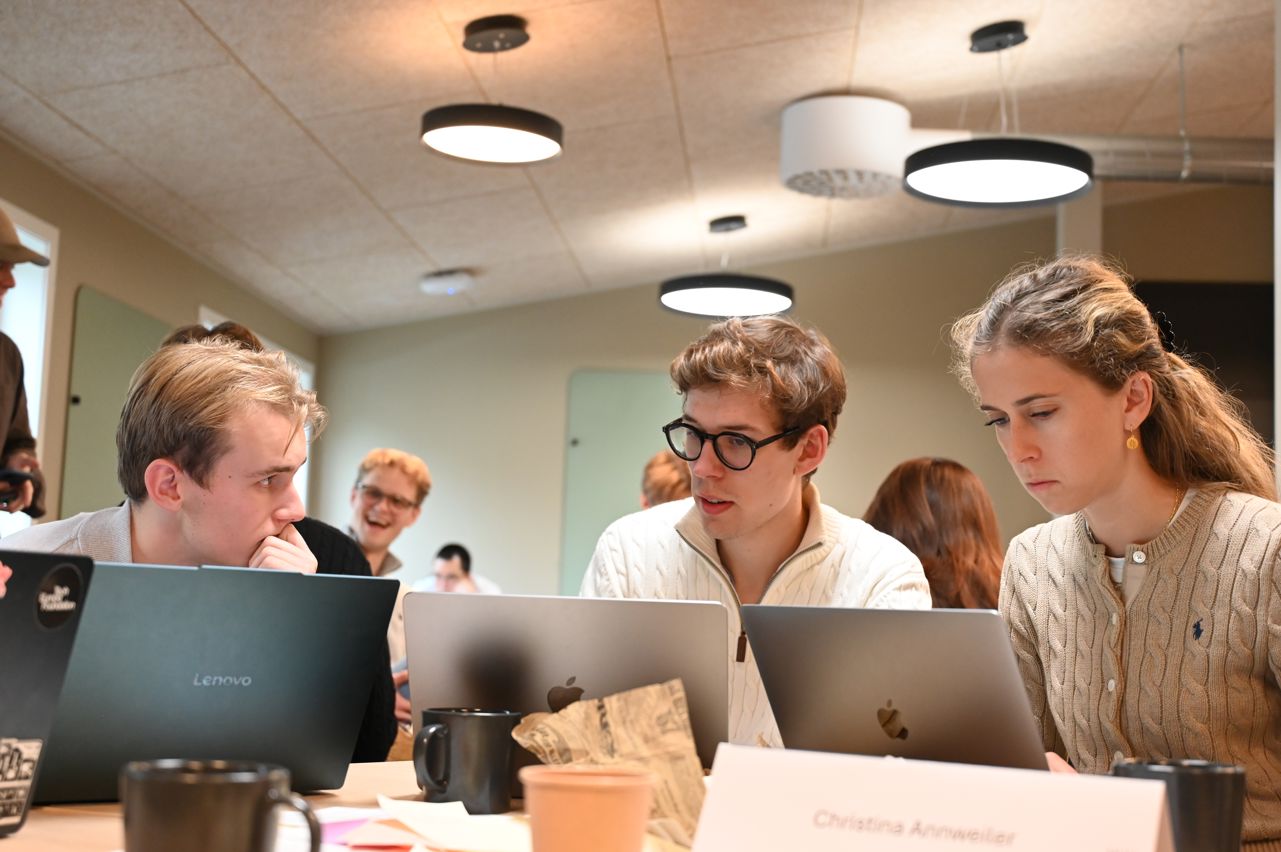
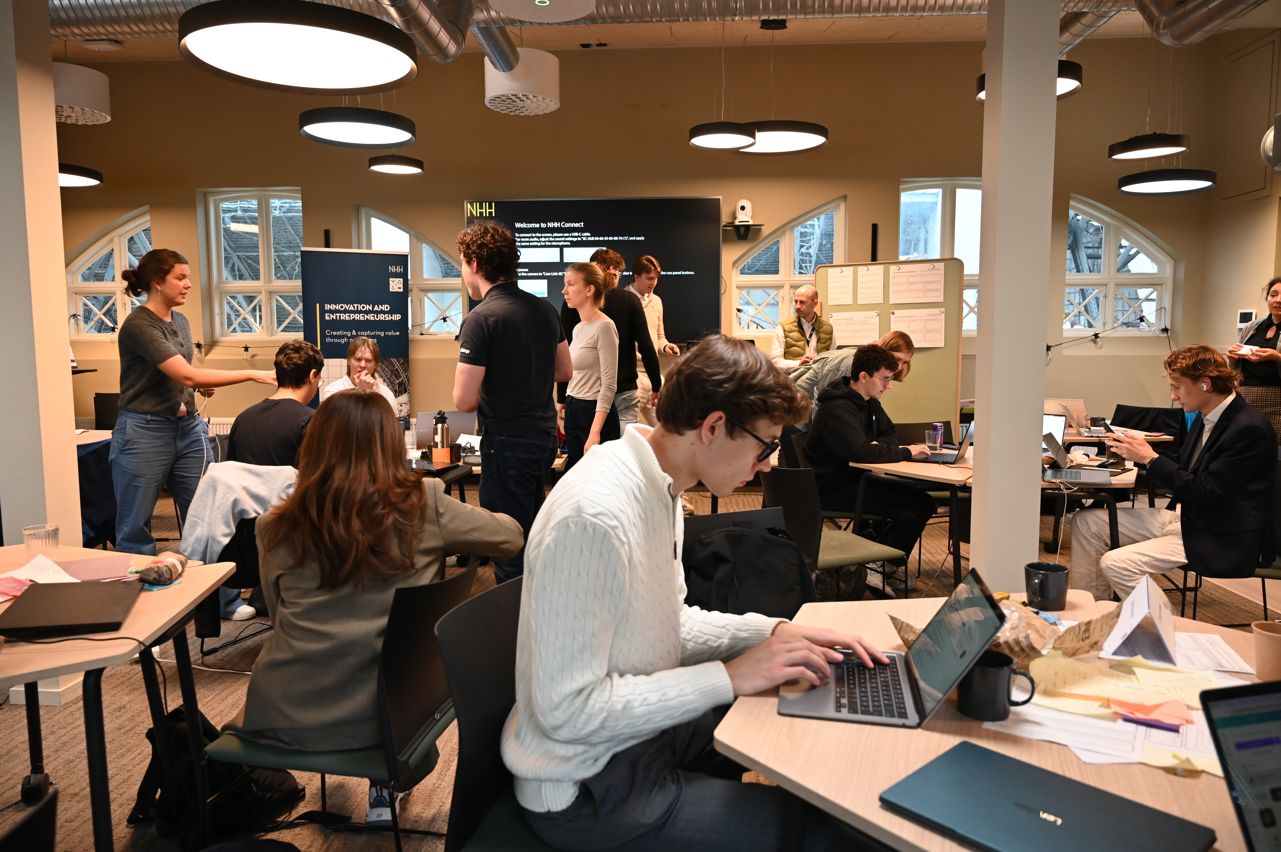
In the hours leading up to the competition, half-eaten croissants and used Post-it notes are scattered across the group tables. Cans of energy drink disappear while PowerPoint presentations receive their final touches. Deep in concentration, with an earbud in place, Ole Heiberg Omang sits testing solutions across multiple screen formats.
'Does it look good enough?'
'We're planning to win, after all,' he comments briefly.
Keeping Independent Thinking Alive
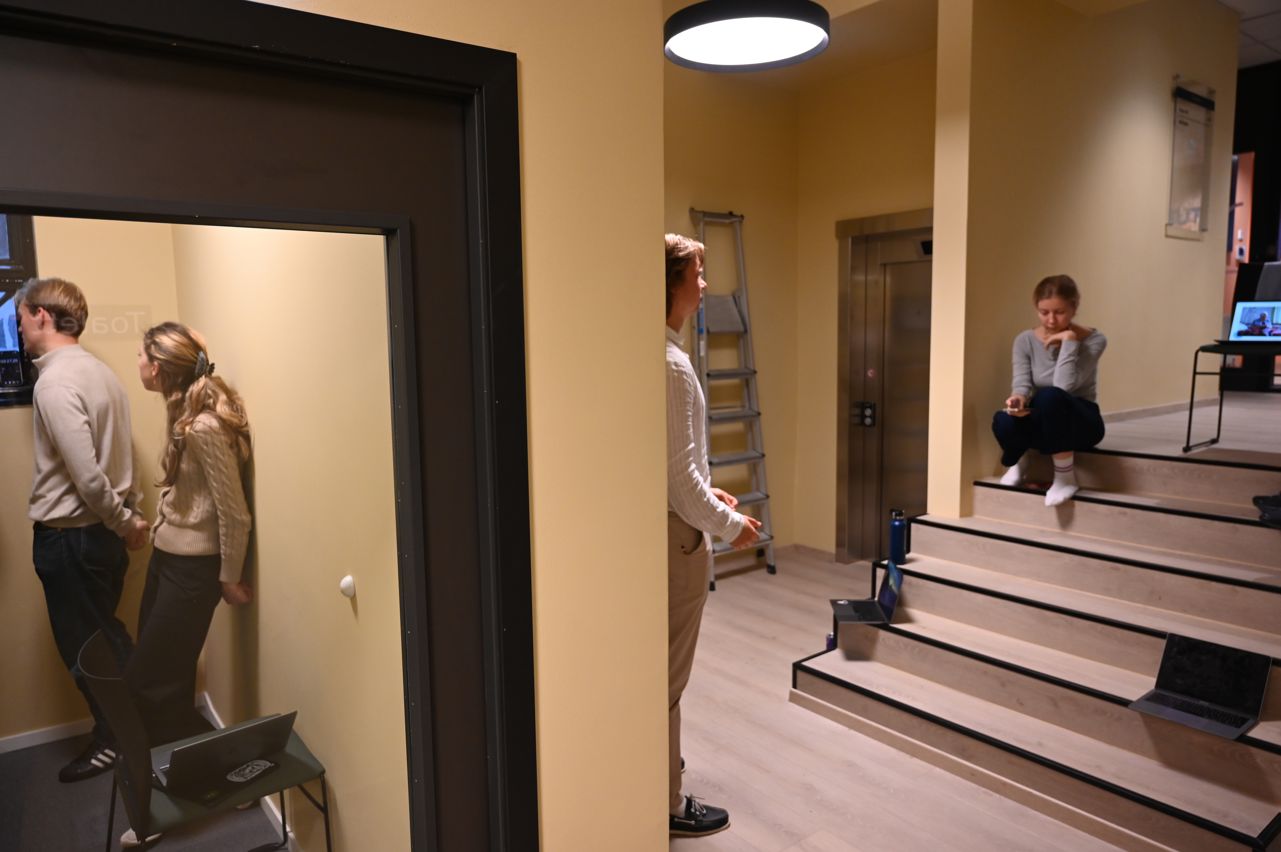
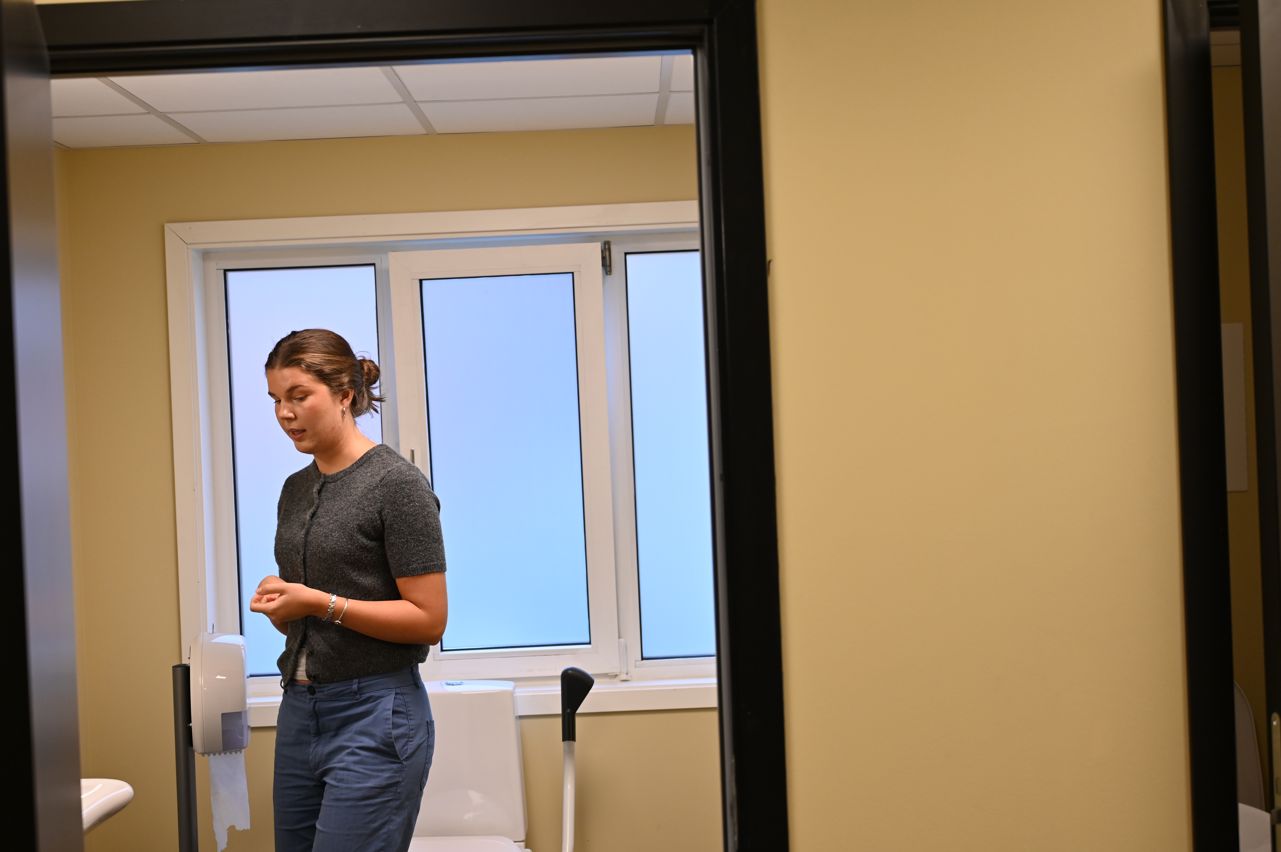
Some students rehearse in stairwells, others practise in the hallways, while final-year student Ida Henriksson from Sweden retreats to the restroom to find some peace before presenting.
Trying to detach herself from the pressure of the moment, she says that participating has been highly valuable in itself.
When Henriksson started her bachelor's degree, AI barely existed as a practical tool. Four years later, she sees AI skills and experience being sought after everywhere. That is why she signed up for the innovation lab.
'It feels highly relevant to working life,' says Henriksson, before quickly adding:
'It is extremely important not to stop thinking for yourself. I see that some younger students are becoming very dependent on AI and struggle to think independently.'
That is precisely why the AI sprint is valuable, she argues.
'Here, we use AI as a tool and an assistant, but we have to think independently to come up with ideas and develop them. AI is not particularly good at being creative!'
Inez Van Lantschoot from Belgium, a member of the winning Ready Hands team, agrees. She appreciated the concrete nature of the challenge.
'It is very educational to go from identifying a problem to developing an idea and turning it into a concrete project in such a short period of time.'
Her teammate Edgar Laizans points to another personal benefit.
'It is good to force yourself out of your comfort zone.'
Confidence in the Ideas
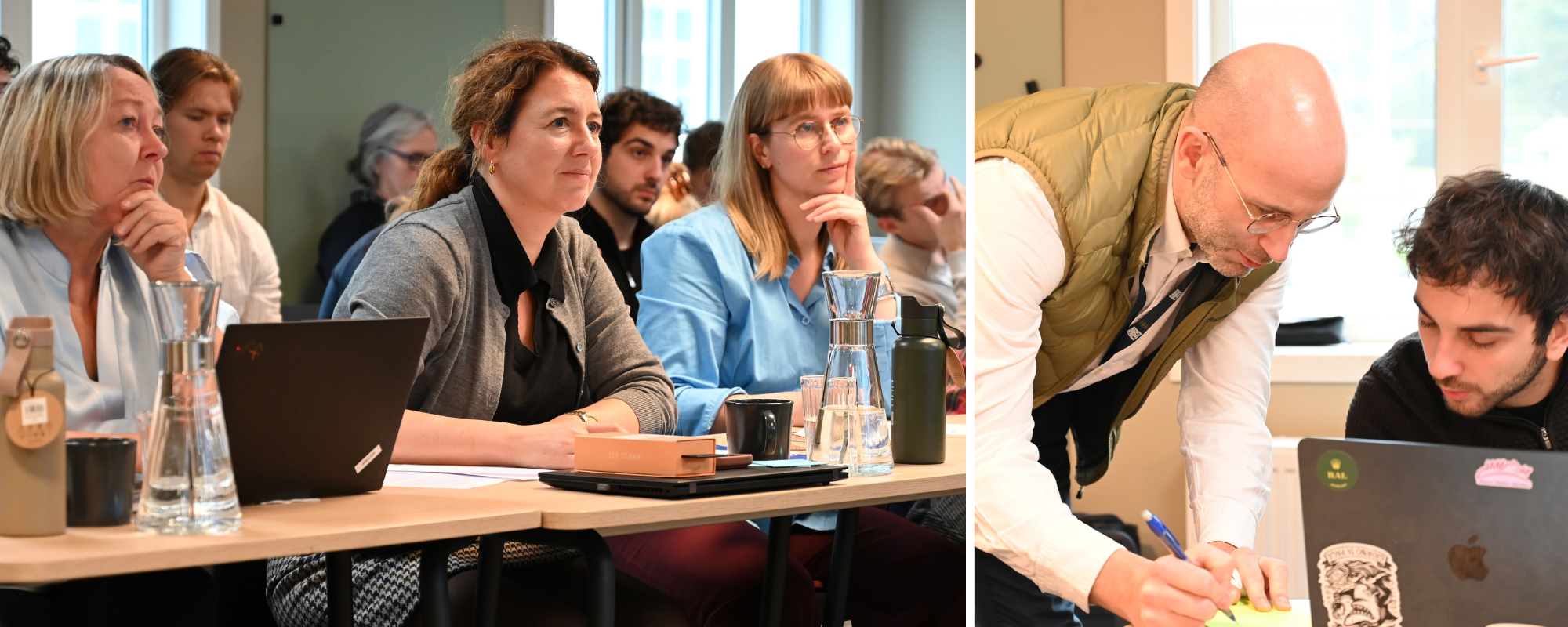
Associate Professor Björn Schmessher from the Department of Strategy and Management led the innovation lab. He, too, was relieved when it was all over.
'It was intense. But what the students created was impressive,' says Schmeisser.
He explains that the purpose of the sprint was to show students that entrepreneurship and innovation can be viable career paths for NHH graduates.
'We also wanted to demonstrate that entrepreneurship is not about luck or being a genius. There is a structured approach that combines creativity and discipline,' says Schmeisser.
'When this is combined with artificial intelligence, impressive results can be achieved in a very short time.'
Anne Marie Vigeland, a jury member from the Diakonova Haraldsplass Foundation, believes several of the ideas have genuine potential beyond the competition.
'What impressed me most was that several teams presented solutions that can actually be developed further and put into practice to address real societal challenges.'
'It is inspiring to see how the students combine empathy, insight and innovation to develop solutions that can make a difference in society,' she adds.