NHH professor critical of data centre measures
A licensing scheme for data centres could create extensive bureaucracy, fears NHH professor Øivind A. Nilsen. He believes the authorities should instead use prices and taxation to steer growth.
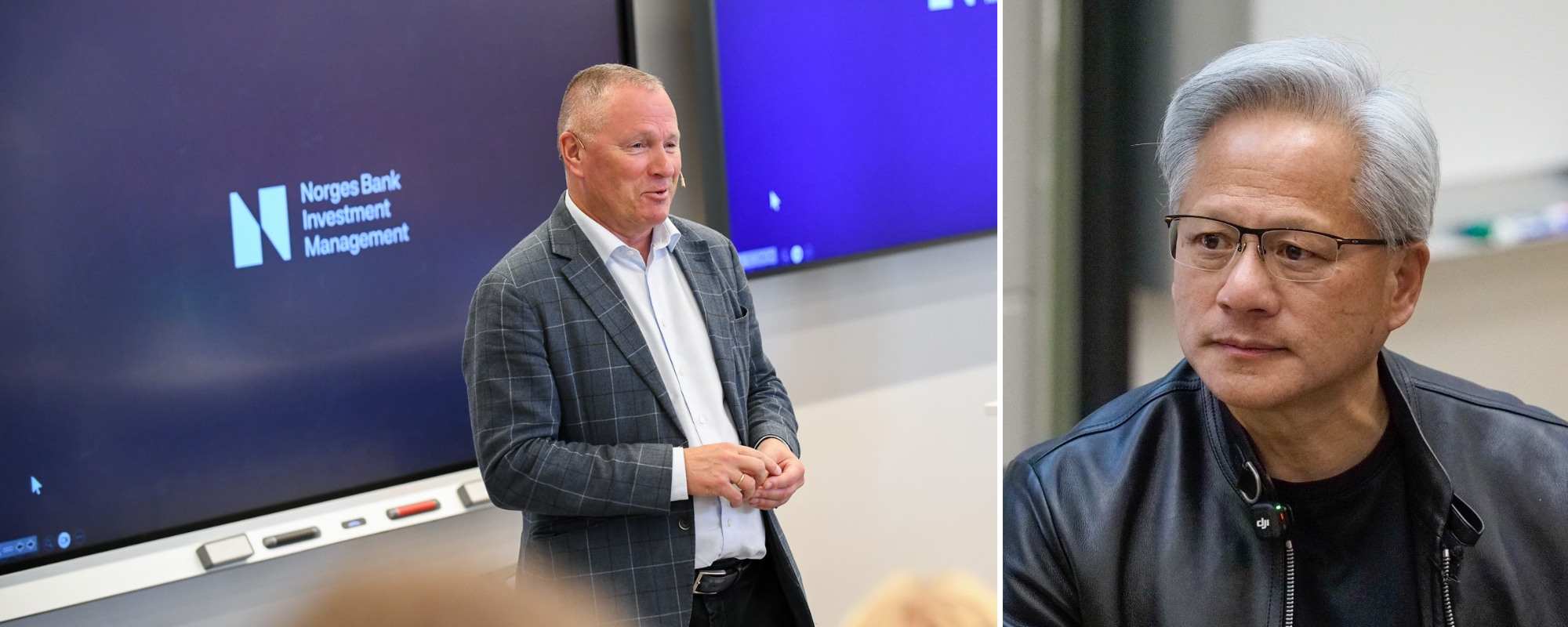
Nvidia’s rollercoaster has rattled markets. But Norway’s Oil Fund has a little-known «AI shock absorber» that could soften the blow.
In the space of little more than a week, he was caught up in scandal, ousted and then reinstated as CEO, reportedly after strong pressure from the president.
Jensen Huang, Nvidia’s leather-jacketed chief executive, has helped shake global stock markets this November.
Shares in the chip giant have been on something resembling a bungee jump: sharply down, straight back up, then down again, dragging much of the market along for the ride.
The turmoil has also affected the value of Norway’s sovereign wealth fund, commonly known as the Oil Fund, and reignited a debate about its vulnerability. Critics have asked whether the fund is too heavily exposed to AI stocks and a potential tech bubble.
But according to Trond Døskeland, a professor and investment expert at NHH, one factor has largely gone unnoticed: the Oil Fund has a built-in shock absorber against a major AI sell-off.

Earlier this year, Døskeland and his NHH colleague André Wattø Sjuve submitted a report to Norway’s Ministry of Finance on the active management of the fund by Norges Bank Investment Management (NBIM).
Their main finding was striking: active management has added NOK 400 billion in value to the fund.
But the report also showed that the Oil Fund has held less in large US technology companies than its benchmark index would suggest. In market jargon, the fund has been underweight big US tech.
‘The fund has enjoyed much of the rise in US stocks and technology, but less than the index,’ Døskeland says.
According to Døskeland, that tactical choice reduced the fund’s active returns by roughly NOK 30 billion.
Put simply, the Oil Fund made almost NOK 30 billion less than it would have if it had simply followed the index.
When Nvidia shares plunged, financial headlines screamed about the losses. But for exactly the same reason, the Oil Fund may have lost less than many people think.
‘When the market falls, the brake works the other way. The fund will probably do slightly better than the index,’ Døskeland says.
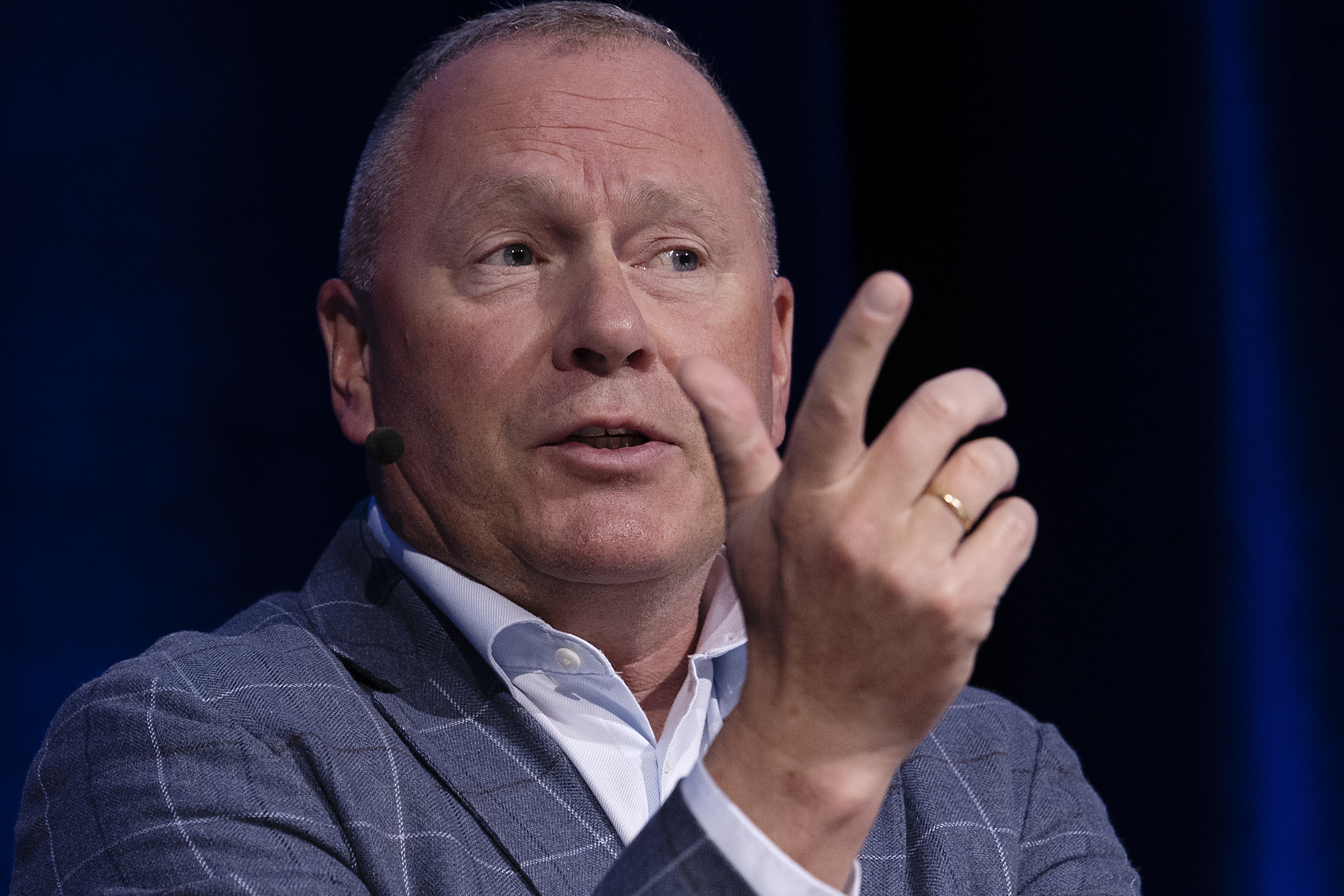
Foto: Ingunn Maarnes-Gjærde
He gives a simple example:
‘If a pure index fund had lost NOK 200 billion because of a fall in Nvidia, the Oil Fund, because it owns less technology than the index, might in practice have lost only NOK 180 billion. In other words, it loses less in absolute terms than the index would suggest.’
Døskeland stresses that the real impact of November’s market swings will not be clear until the Oil Fund publishes its next results in the new year. In principle, the fund may also have changed its position in the meantime.
‘But personally, I think Nicolai Tangen has held his nerve and stuck to his positions,’ Døskeland says.
Tangen has described himself as a ‘die-hard’ believer in AI. He has said it is difficult to overstate how important AI tools will become.
So why would the Oil Fund put the brakes on technology stocks?
‘Even though Tangen is very bullish on AI, he may still think the stocks are simply too expensive. That could explain why the fund is underweight compared with the index,’ Døskeland says.
And what happens if the AI sceptics are right and the much-discussed bubble bursts?
‘Then the Oil Fund will make more, or lose less, than the index. Tangen could end up looking like the man who saw the fall coming,’ Døskeland says.
The NHH-professor himself does not expect an AI crash.
‘Share prices are now trying to find the right level for the AI sector, and that means we have to expect ups and downs. We have seen the same thing many times during big shifts, such as the rise of the internet and green investment,’ he says.
For investors, he adds, that risk is part of the deal.
‘It is precisely this uncertainty and volatility that creates the potential for higher returns from owning stocks.’